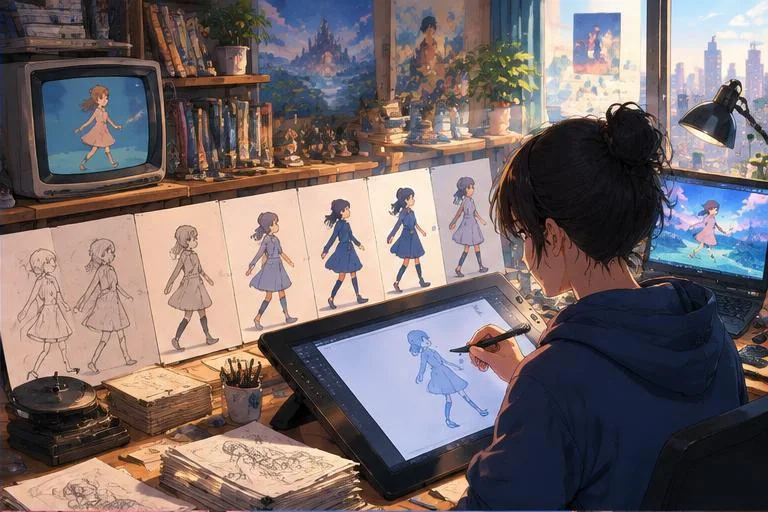
Anime has never had just one visual style. From economical television drawings to photographed cels and digitally composited scenes, artists have used changing tools to solve different creative problems. This guide traces those choices across eras. On manga18fx, we explain the ideas behind anime and manga in plain language so newcomers can explore with confidence. This guide stays spoiler-free and focuses on useful questions you can bring to your next viewing or reading session. You do not need prior expertise, a huge watchlist or an opinion about every era to begin. Start with what interests you, and let the details become familiar through experience.
A changing language, not one look
There has never been a single anime art style. Different studios, creators, budgets and audiences have always produced different visual languages at the same time. When we talk about change across decades, we are describing broad tendencies rather than a neat line of improvement. At manga18fx, a useful way to explore that history is to look at what artists could make with the tools, schedules and screens available to them. Shape, color, movement and framing all respond to those conditions. The results are creative decisions, not just technical artifacts waiting to be replaced by newer ones.
Early television and economical motion
As Japanese television animation expanded in the mid-twentieth century, teams developed ways to tell stories within demanding episode schedules. Held poses, repeated cycles and carefully chosen camera moves could focus attention while keeping production possible. Strong silhouettes and clear expressions helped characters read on relatively small television screens. These techniques were not simply shortcuts: a still image can gain surprising force when a scene builds toward it. Looking at older work with its original viewing conditions in mind makes its bold graphic choices easier to understand and appreciate.
The reach of analog cel animation
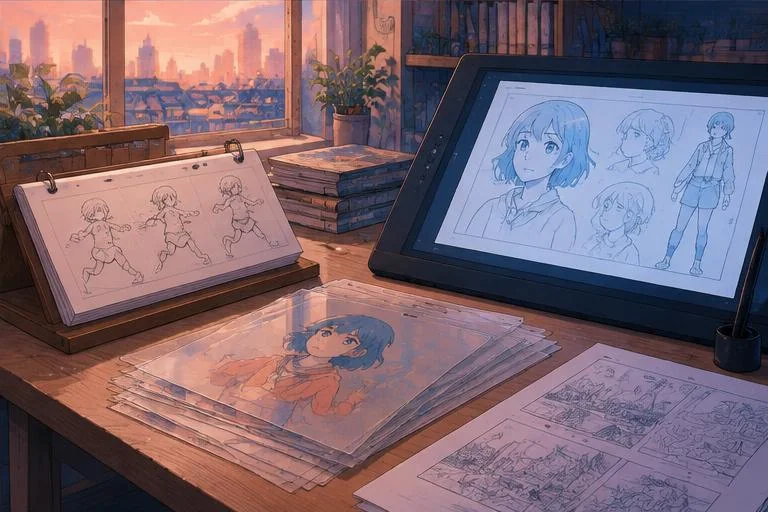
For many years, artists drew on paper and transferred or painted images onto transparent cels, layering them over backgrounds for photography. Different line weights, paint choices and lighting methods gave productions distinct textures. Detailed backgrounds could make a scene feel expansive even when character movement was restrained. Later analog-era productions explored varied design proportions and more ambitious effects alongside the familiar television workflow. Nostalgia often attaches to the texture of photographed materials, but those materials also required painstaking coordination among many specialists. A finished frame was the result of a collaborative process, not a lone artist's drawing.
Digital tools change the workflow
Digital coloring and compositing gradually changed how drawings were finished and assembled. Artists gained flexible ways to adjust light, combine layers and revise color without repainting physical materials. Computer-assisted imagery could help construct environments or camera movement, though fitting it with drawn characters remained an artistic challenge. The shift did not erase hand-drawn design: many productions still begin with expressive drawings and rely on skilled animators to communicate weight and emotion. Digital tools expanded the palette of possibilities while introducing new decisions about consistency, texture and how polished a scene ought to feel.
Screens, formats and contemporary variety
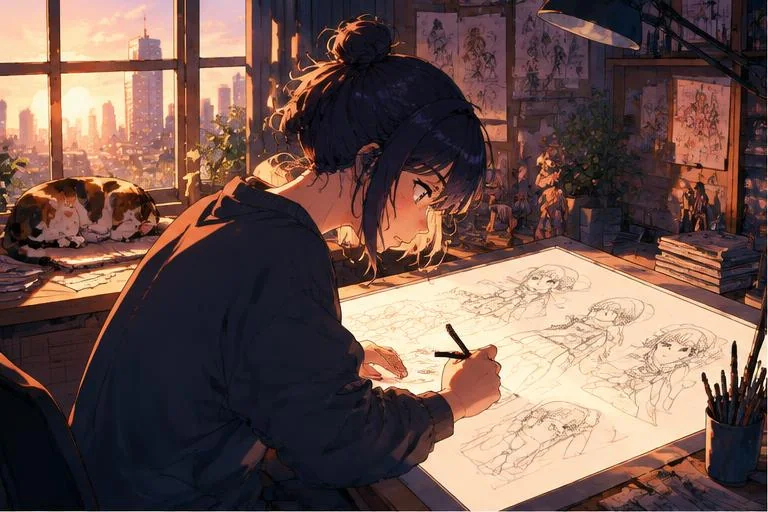
Wider displays and high-resolution delivery invite compositions with more detail, subtle gradients and elaborate backgrounds. At the same time, a small phone screen rewards clarity and recognizable shapes. Contemporary productions answer that tension in different ways: some use restrained palettes and minimal lines, while others fill the frame with layered light and motion. Short-form work, television series and feature films can each support different levels of visual density. It is more accurate to talk about a flourishing of approaches than a single modern look. Compare the framing of everyday scenes as well as the spectacular moments.
How to look with fresh eyes
Choose works from different periods and observe one detail at a time: the shape of a face in profile, the color of shadows, the way a background holds still or the timing between poses. Consider the intended screen and production context before deciding that one decade looks better. An older limited-motion scene may use composition brilliantly, while a new production may find expression in lighting or fluid camera movement. The art-history guides on manga18fx aim to give names to those choices so that every era becomes easier to enjoy on its own terms. Curiosity is a better guide than nostalgia or novelty alone.
Keep exploring at your own pace. The related guides on manga18fx connect this topic with broader questions about genre, format and the craft of storytelling. Choose one next question that genuinely interests you, and follow it to a new page or episode. Good fandom begins with curiosity, not a checklist.