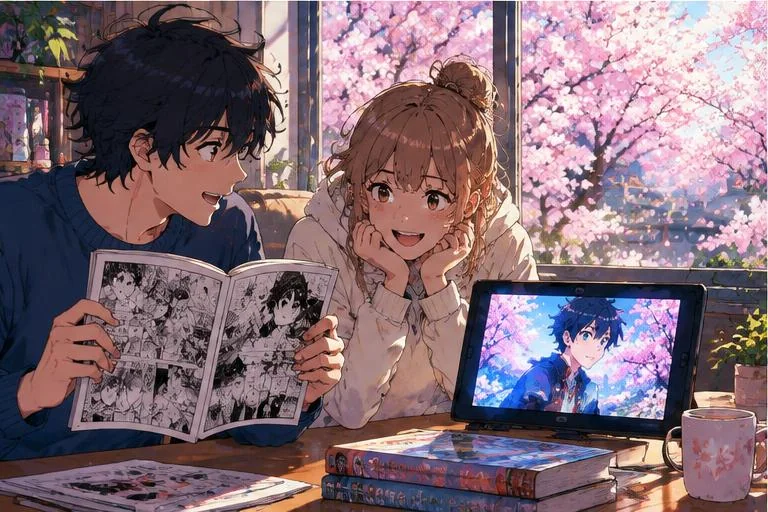
Ask any longtime fan and they will tell you: manga and anime, while closely related, are not interchangeable experiences. One is a printed, hand-drawn medium built around panels and page turns; the other is a moving, scored, voice-acted production built around timing and sound. Understanding these differences helps explain why adaptations sometimes feel faster, slower, or noticeably different from their source material, and it is one of the most common questions readers bring to guides on manga18fx.
Pacing: Page Turns Versus Runtime
A manga reader controls pacing entirely. You can linger on a dramatic splash page for as long as you like, flip back to reread dialogue, or breeze through an action sequence in seconds. Anime, by contrast, runs on fixed time. A twenty-minute episode has to fit dialogue, movement, and pauses into that runtime, which means studios must make deliberate choices about what to compress, extend, or cut entirely. This is why a single manga chapter sometimes becomes a rushed scene, and other times becomes an entire episode packed with added visual detail.
Art Style and Visual Storytelling
Manga artists rely on line work, screentones, panel shape, and page layout to convey emotion and motion. A jagged panel border can suggest chaos; a wide, empty panel can suggest stillness or shock. Anime translates these ideas into color, camera movement, and animation timing. A studio might use a slow zoom, a lighting shift, or a burst of sound effects to recreate the impact of a striking manga page. Neither approach is superior, but they require very different skills, and comparing them page-for-frame can be misleading.
Sound Changes Everything
Perhaps the single biggest difference is sound. Manga has no music, no voice performances, and no sound effects beyond stylized lettering. Anime adds a full sonic layer: voice acting choices shape how a character is perceived, background music sets emotional tone, and silence itself becomes a storytelling tool when a scene deliberately withholds score. Fans who read a series first and watch it later often describe hearing a character's voice for the first time as a genuinely new experience layered on top of a familiar story.
Production Timelines and Consistency
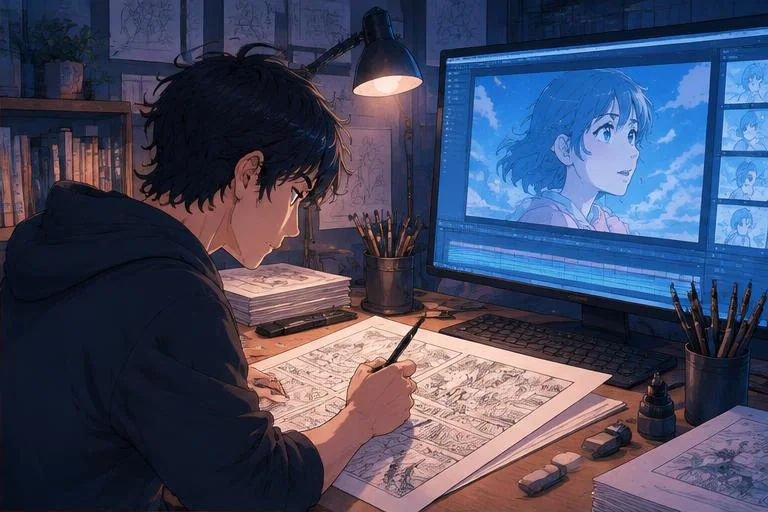
Manga is typically produced by a small team, often a single creator with a handful of assistants, working on a chapter-by-chapter schedule. Anime requires much larger teams: directors, animators, sound designers, voice actors, and editors, all coordinated around a broadcast calendar. Because of this, manga can sometimes maintain more consistent art quality over a long run, while anime quality can vary episode to episode depending on production schedules and budget allocation across a season.
Adaptation Choices: What Gets Changed and Why
When a manga becomes an anime, studios make countless small decisions about pacing, added scenes, or reordered events. Some changes exist purely for runtime reasons; a season needs a certain number of episodes, and chapters do not always divide evenly. Other changes are creative choices meant to strengthen pacing for a viewing audience rather than a reading one. Recognizing that these are two different mediums, each with its own strengths, makes it easier to appreciate an adaptation on its own terms instead of judging it purely against the source.
A faithful adaptation is not the same as an identical one; sometimes fidelity means changing the format to preserve the feeling.
Which Should You Experience First?
There is no universally correct order. Starting with the anime gives you music, voice performances, and motion right away, while starting with the manga lets you set your own pace and see the artist's original panel composition before any adaptation choices are made. Many fans enjoy alternating: reading ahead when curious, then watching an arc once it airs to experience it with sound and animation for the first time. On manga18fx, we encourage readers to try both formats at least once with a favorite story, since the comparison itself often reveals new details in each version.
Original Content and Divergence
Occasionally an anime adaptation reaches a point where it must include original content not found in the source material, often because the anime has caught up to an ongoing manga's publication pace. These original arcs are usually developed with input from the original creator to stay consistent with characters and tone, even though the specific events are new. Understanding this production reality helps explain why some seasons feel different in tone from the chapters that inspired them.
- Manga pacing is reader-controlled; anime pacing is fixed by runtime
- Visual storytelling relies on panels and linework in manga, and motion plus sound in anime
- Voice acting and music add an entirely new emotional layer in anime
- Production team size and schedules differ significantly between the two mediums
- Adaptation changes are often practical, not just creative, decisions
Conclusion
Manga and anime are companions rather than competitors, each offering a distinct way to experience the same underlying story. Recognizing their different strengths, controlled pacing on the page versus immersive sound and motion on the screen, helps you appreciate both formats without expecting one to simply replicate the other. Whichever you choose first, understanding these fundamentals, as explored throughout manga18fx, will make your next favorite series even more enjoyable.