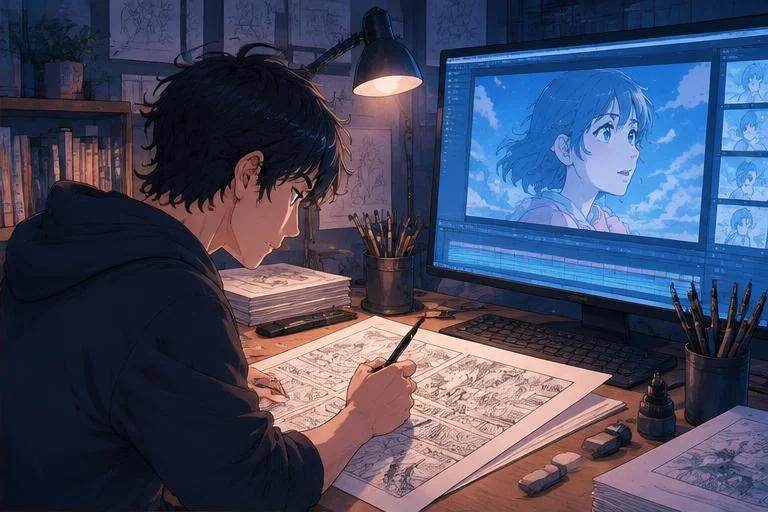
What changes when a story moves from page to screen? Manga and anime differ in who controls the pace, how images carry emotion and what sound brings to a scene. This comparison explains why both versions can be worth your time. On manga18fx, we explain the ideas behind anime and manga in plain language so newcomers can explore with confidence. This guide stays spoiler-free and focuses on useful questions you can bring to your next viewing or reading session. You do not need prior expertise, a huge watchlist or an opinion about every era to begin. Start with what interests you, and let the details become familiar through experience.
Two media with different tools
Manga generally refers to Japanese comics, while anime refers to Japanese animation. The distinction is not simply whether the pictures move: each medium organizes attention differently. On a page, a reader controls how long to examine a panel and when to turn it. On screen, timing, motion, voices and sound guide the experience moment by moment. Both can tell expansive or intimate stories, and neither is inherently the definitive version. At manga18fx, we think the most rewarding comparison begins by asking what each creator can do especially well with the tools available to them.
Pacing belongs to the reader or editor
A manga page can linger while you inspect its composition or rush forward as your eyes follow a sequence of panels. An anime episode fixes the duration of a scene through editing, dialogue and music. This difference can make the same conversation feel contemplative in print and urgent on screen, even without changing the words. Anime productions may expand a quiet moment or rearrange beats to fit an episode's length. Manga artists can shape a surprise with the position of a page turn. Notice how you respond to each rhythm before judging one version by the other's tempo.
Line, color, movement and sound
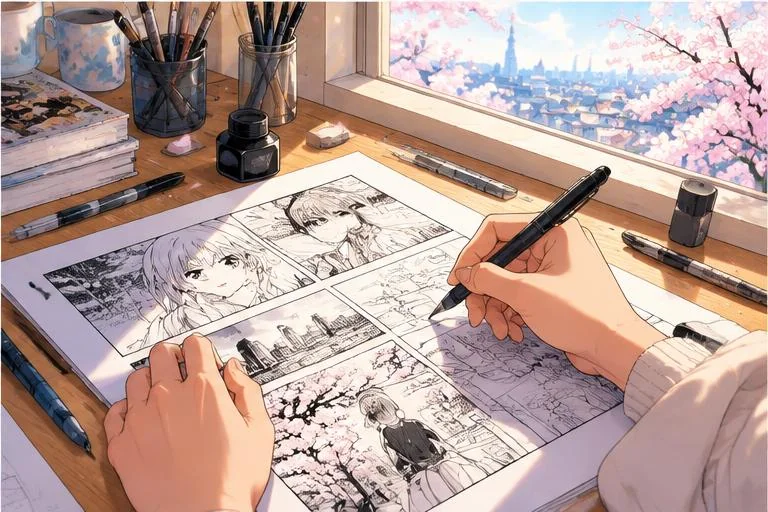
Manga is commonly printed in black and white, encouraging artists to create texture through line weight, contrast and screentone. Anime usually adds color, motion and a designed soundscape. A voice actor's pause, a change in lighting or an original score can transform how a scene feels. Conversely, a striking manga panel may invite longer attention than a fleeting animated shot. Neither set of tools is automatically more expressive. Compare a simple sequence without spoilers and ask which details you noticed first. The answer will reveal how each form steers your eye and ear.
Why adaptations make changes
Adapting a work is a process of translation between media, not photocopying. A television episode has a running time, budget and production schedule, while a chapter has page limits and a different relationship to readers. Teams may condense conversations, add transitional scenes or change where an episode ends to create a satisfying rhythm. Sometimes a series catches up with an unfinished source, prompting a pause or a distinct interpretation. Changes do not by themselves prove carelessness. Look at what each version emphasizes and whether it remains coherent on its own terms.
How publication and viewing differ
Manga can appear in magazines, digital releases or collected volumes, sometimes with revised artwork between formats. Anime may first appear on television or licensed streaming services, with physical releases later. Access and translation depend on region and distribution agreements. If you want to compare versions, use authorized editions and check the release order; a volume and an episode may cover different amounts of story. A library can also be a good place to explore manga legally. These practical differences shape when audiences encounter a story just as much as artistic choices do.
Which format should you try first?
Choose the format that fits your preferred experience rather than following a universal rule. If you enjoy controlling your pace and studying drawings, begin with a manga volume. If performance, movement and music draw you in, try an anime episode. If both exist, comparing a small early section can reveal how adaptation works without demanding a full commitment. Check age guidance for each version independently, since presentation can affect how intense a moment feels. The guides on manga18fx are here to help you appreciate both forms, not to declare a winner.
Keep exploring at your own pace. The related guides on manga18fx connect this topic with broader questions about genre, format and the craft of storytelling. Choose one next question that genuinely interests you, and follow it to a new page or episode. Good fandom begins with curiosity, not a checklist.