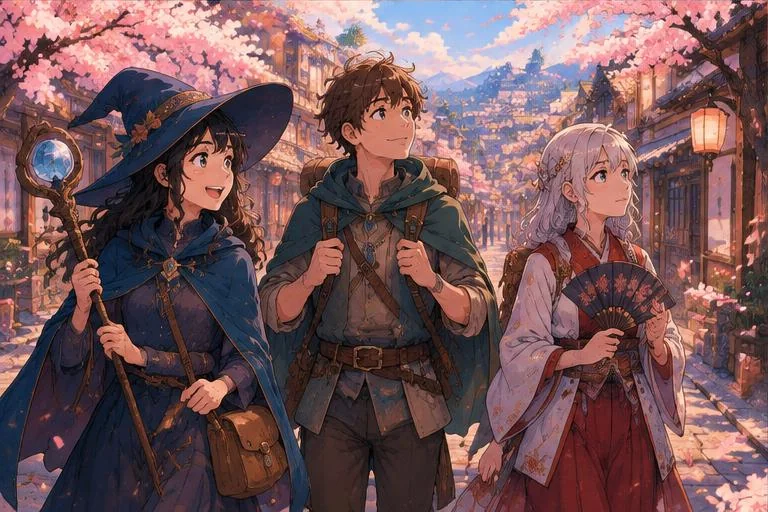
Anime genres can feel like an unfamiliar language when you are choosing your first series. A Beginner's Guide to Anime Genres gives you a way to separate story moods from audience labels and find an enjoyable first watch. On manga18fx, we explain the ideas behind anime and manga in plain language so newcomers can explore with confidence. This guide stays spoiler-free and focuses on useful questions you can bring to your next viewing or reading session. You do not need prior expertise, a huge watchlist or an opinion about every era to begin. Start with what interests you, and let the details become familiar through experience.
Start with mood, not a label
A genre is a promise about what a story spends time on, not a guarantee of every scene. Adventure usually emphasizes movement and discovery; comedy prioritizes timing and surprise; drama spends longer with difficult choices. If you begin with the feeling you want after an episode, the labels become helpful filters rather than homework. A quiet series can still contain humor, and an action series can contain an unexpectedly tender friendship. Read the short premise alongside any label and ask whether its central question interests you. That approach will make a crowded catalog feel more like a shelf of possibilities than a test of your knowledge.
Action, adventure and fantasy
Action often uses physical movement to make stakes visible, while adventure sends characters into unfamiliar places and lets their goals evolve on the journey. Fantasy changes the rules of the world itself, inviting questions about its history, creatures or imagined systems. These labels overlap frequently but do different jobs: a story can have fantasy scenery without much action, or an energetic competition without magic. For a first watch, consider whether you enjoy a quick pace and visible goals or prefer time to absorb the setting. Check a content overview too, since a broad label cannot tell you whether a particular title suits your household.

Romance, comedy and everyday life
Romance focuses on relationships and emotional decisions; comedy is organized around playful contrast; slice of life notices the significance of ordinary routines. A school setting does not automatically make a story a romance, and a romance need not depend on dramatic misunderstandings. Slice-of-life storytelling may appear uneventful if you expect a major quest, but small changes in trust, confidence or belonging can be the point. Try an episode when you are ready to notice gestures, conversation and atmosphere. If you want something gentle, check the tone description as well as the genre, because any category can include both bright and bittersweet works.
Mystery, science fiction and sports
Mystery invites the audience to ask questions and assemble clues, sometimes placing the puzzle ahead of spectacle. Science fiction explores how an imagined technology or future society might change people's lives, even when the setting looks familiar. Sports stories use training, teamwork and competition to show growth; knowing the rules of the game is rarely a prerequisite. Each of these labels can blend with comedy or drama. Decide whether you enjoy solving a question, thinking through an idea or following a shared goal. Then sample the opening episode or chapter before committing to a long run.

Audience labels are different
Shounen, shoujo and seinen are publishing-audience labels, not narrative genres. They originated as ways to describe the readership for particular manga magazines; they do not limit who may enjoy a story. An adventure can be shounen, a mystery can be shoujo and a gentle everyday story can be seinen. This distinction matters when a listing piles words together: one term may describe an audience while another describes plot or mood. For an all-ages selection, do not assume that a demographic label is a content rating. Check the actual rating and a reliable content advisory before deciding what to read or watch.
Build a small genre sampler
Choose three short, age-appropriate series or previews from clearly different moods: perhaps one lively adventure, one relationship-centered comedy and one reflective everyday story. After each, write down what you liked about its pace, characters and visuals. You may discover that you enjoy the storytelling rhythm more than the label printed on the cover. There is no need to finish something that does not suit you. Browse the dedicated genre guides on manga18fx for deeper descriptions, then revisit your notes when choosing the next title. The best genre is simply a useful direction for finding stories that hold your attention.
Keep exploring at your own pace. The related guides on manga18fx connect this topic with broader questions about genre, format and the craft of storytelling. Choose one next question that genuinely interests you, and follow it to a new page or episode. Good fandom begins with curiosity, not a checklist.